Research topics - termite evolution
Here are further explanations of our research topics and examples of the kinds of research we do.
Evolution of leader role in termite tandem runs
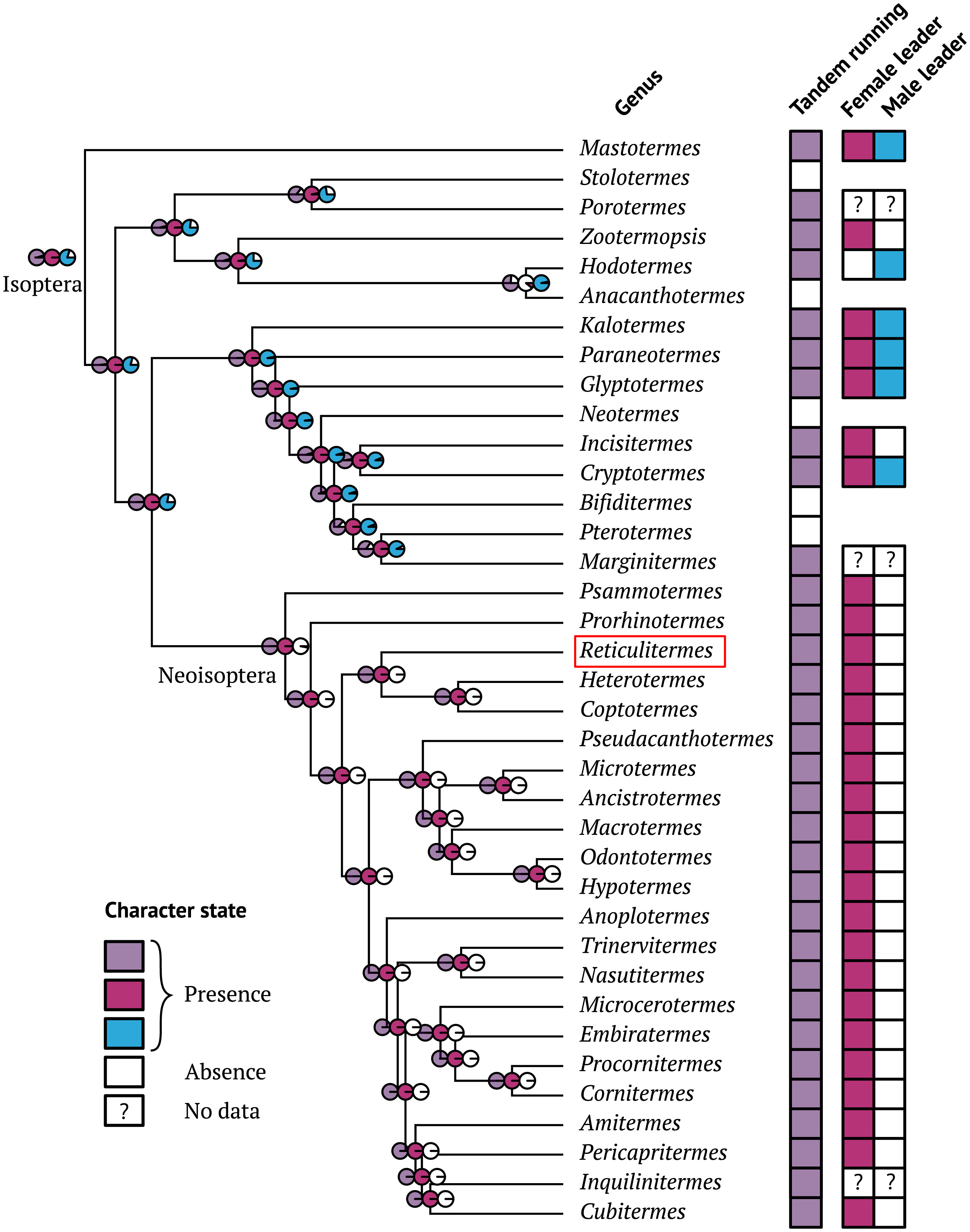
Termites show same-sex tandem-running behavior in both female-female and male-male pairs. How do they achieve such unusual pair movement coordination? Why can they exhibit such behavioral plasticity? Using state-of-the-art automated video tracking and trajectory analysis of movement behavior, we revealed that same-sex tandem running is achieved by one individual behaving like the other sex. Using data-driven simulations, we showed that this behavioral plasticity contributes to maintaining pair coordination. We also compiled published information about termite mating behavior across 72 species and demonstrated that termites have such behavioral flexibility because their ancestor did not have sex-specific leader-follower roles, so both females and males could lead or follow. Termites inherited this behavioral flexibility from an ancestral lineage and use it for same-sex tandem-running behavior.
Mizumoto et al., 2022 PNAS
Evolution of termite nest and termitophilous rove beetles
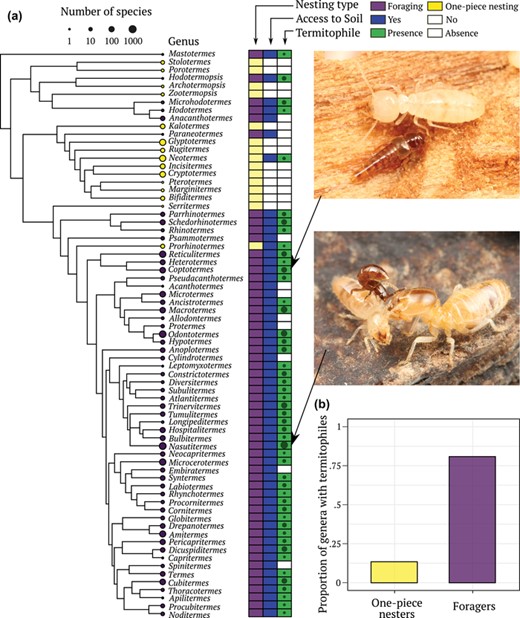
Observing termite nests, you may find insects that are not termites. They are called termitophiles, social parasites integrated into termite societies. We combined an epidemiological model with a phylogenetic comparative analysis to demonstrate that the evolution of complex nesting habitats in termites facilitates the evolution of social parasitism. We compiled all termitophilous rove beetle records to date and available information on termite colony size from the literature. Previous studies on social parasites mainly focused on the parasite species and thus often lacked the perspective of host social insects. This study fills the gap by revealing the characteristics of host species that foster social parasitism.
Mizumoto et al., 2022 Evolution
Evolution of body size in termites
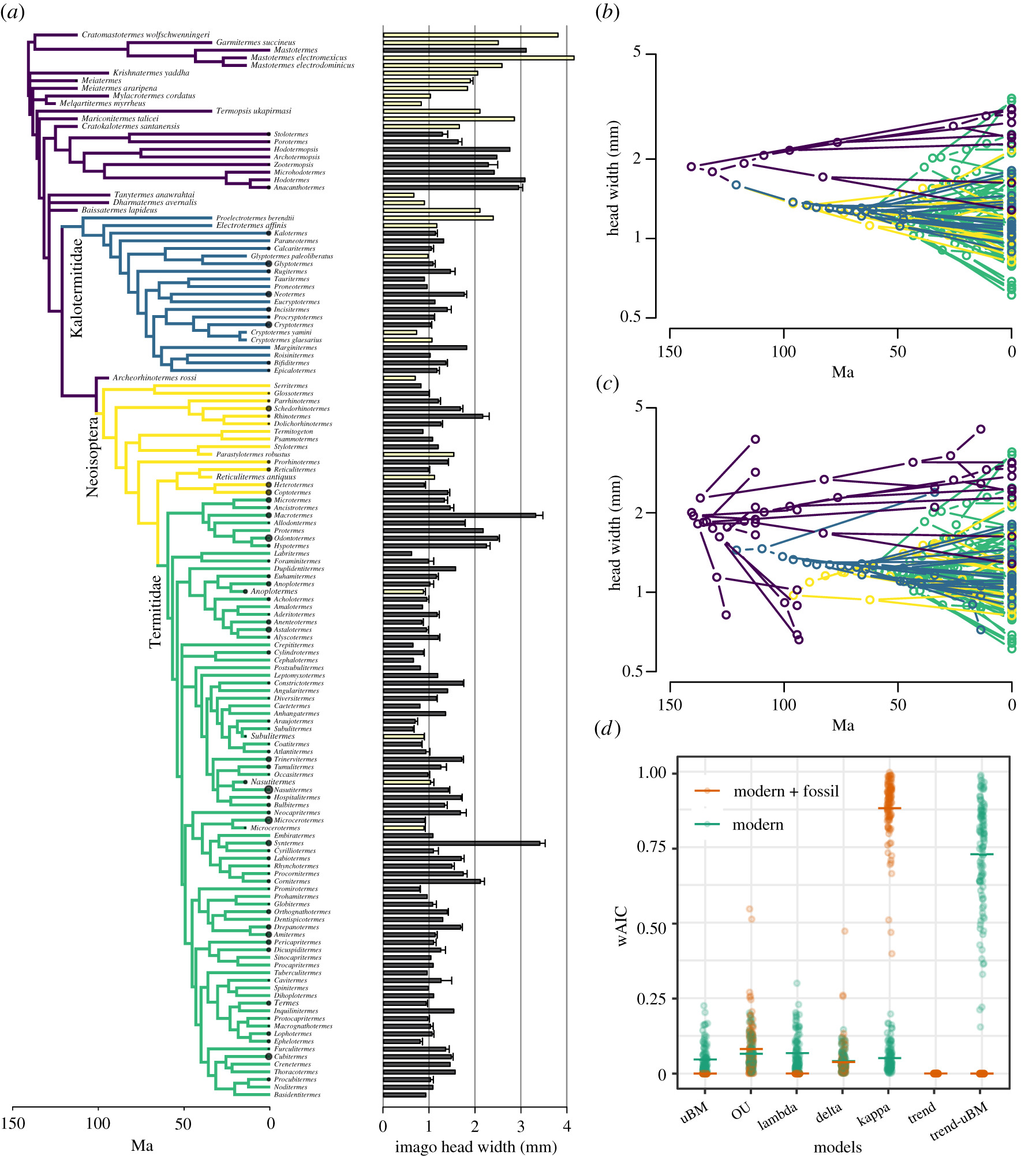
During the long home quarantine due to the COVID-19 pandemic, I assembled body size datasets from 1,638 modern and fossil termite species. Using this dataset, I tested the unidirectional body size reduction hypothesis. This hypothesis is based on the observation that non-termite cockroaches are larger than basal termite lineages, which themselves include large termite species. I reconstructed termite body size evolution and found that the unidirectional body size reduction model was only supported by analyses excluding fossil species. Analyses including fossil species suggested that body size diversified along with speciation events, and body size variability among species is associated with features attributed to advanced termite societies.
Mizumoto and Bourguignon, 2022 Proc R Soc B
Evolution of nesting types in termites

Nest construction in termites is diverse across species. One-piece nesting termites nest within a piece of wood on which they feed, and their colony life is completed within it. Multiple-piece nesting termites feed and nest in wood pieces. They can also expand across multiple wood items connected by networks of galleries. Separate-piece nesting termites build large nest structures separated from their food sources. We overviewed these differences, including the potential for one-piece nesters to build more complex structures.
Mizumoto and Bourguignon, 2020 Ecol Evol