Research topics - building behavior
Here are further explanations of our research topics and examples of the kinds of research we do.
Complex relationship between building behavior and outcome
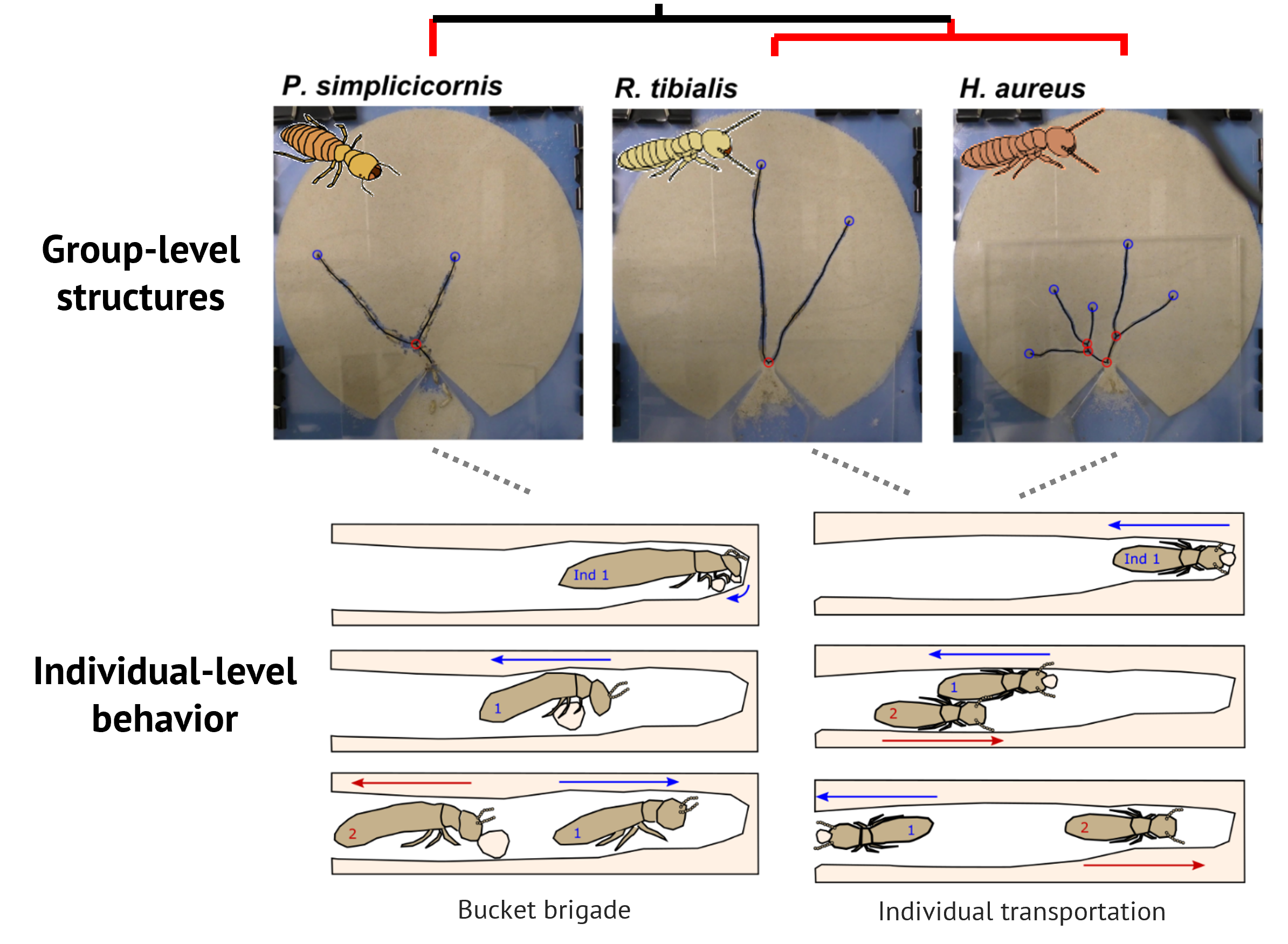
The nests of social insects vary widely in pattern and complexity. One might expect that these different outcomes come from distinct behavioral rules for social interactions. However, my research on tunnel excavation in three termite species in Arizona revealed that this is not true. I found that two related species excavate tunnels with a shared transportation mechanism but build tunnels with distinct branching patterns. On the other hand, I found that a third species has independently evolved a similar tunnel structure to one of the first two species, but builds it using a distinct transportation mechanism (bucket brigade by legs). These results emphasize the importance of the comparative study of collective behaviors at both individual and group levels and raise a question about the origin of distinct behavioral rules for the same collective behavior.
Mizumoto et al. 2020 Am Nat
Mizumoto et al. 2020 AESA
Mizumoto 2023 Ecol Evol
Colony variation of shelter-tube construction by termites
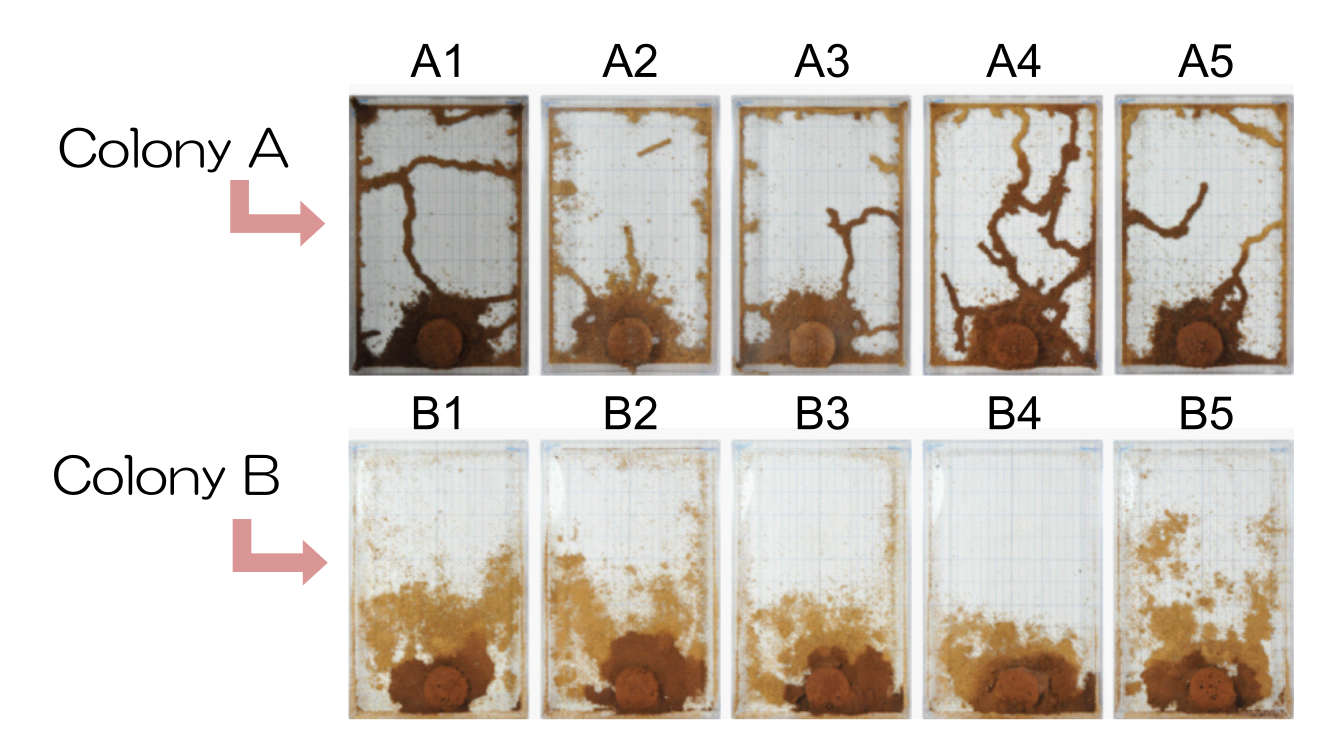
Social insects build sophisticated and complex structures such as large nests and underground galleries. Studies have shown that the same building rules can produce various structures when environmental conditions or group size change. Will social insects construct the same structures under the same environmental conditions and with the same group size? In other words, can nesting structures show colony-specific characteristics? Here, we found distinct colony-specific patterns in termites. When we divided a colony into multiple groups of individuals, groups drawn from the same colony built similar patterns, whereas groups from different colonies exhibited different patterns (Mizumoto and Matsuura 2013 Insect Soc).
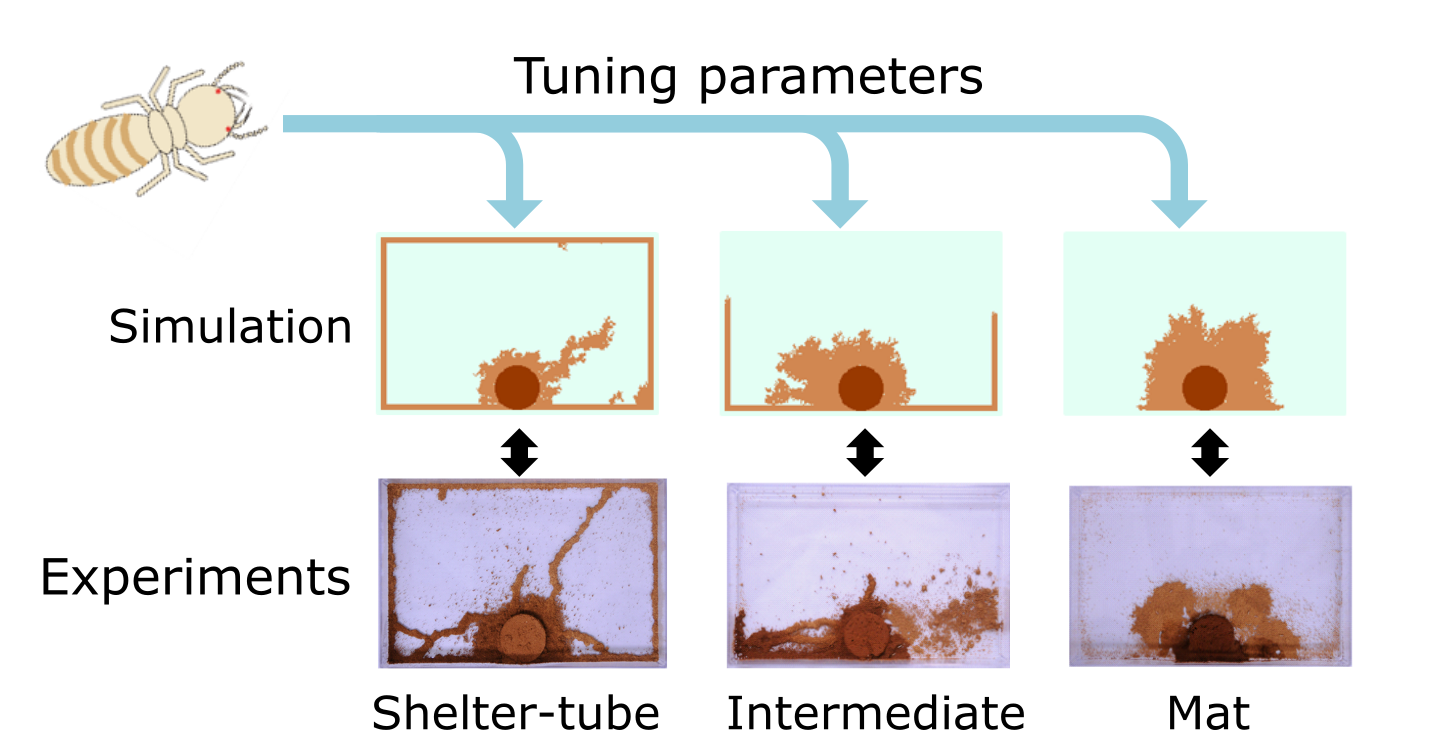
Because colony differences in structures arise under the same environmental conditions and with the same number of individuals, we can expect termite workers from different colonies to differ in their responses. To explore the factors that affect construction, we developed a lattice model mimicking termite behaviors (Mizumoto et al. 2015 RSOS).
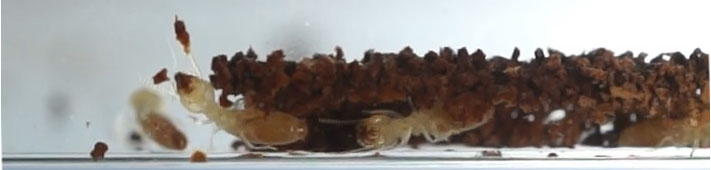
Termite workers carry a piece of wood to the end of the shelter tube and attach it. This process repeats as shelter tubes are constructed. Termite workers share information during construction and interact locally with each other indirectly using cement pheromone attached to materials. We mimicked this behavioral algorithm in the lattice model. We analyzed the model by changing various factors that can affect the building process and compared the simulation results with the results of empirical experiments.
As a result, we could recreate similar patterns of colony variation by simply changing two behavioral parameters of group members, even with the same building algorithm. This variation was mainly attributed to the extent of positive feedback and the number of individuals engaged in building. Thus, a single algorithm can create variation within a species by tuning exogenous factors such as environment or group size and endogenous factors such as individual responses.